Defence Robotics: Mastering the Entire Value Chain, from Onboard Computing to the GCS.
An operational revolution redefining technology requirements
Recent lessons from the conflict in Ukraine highlight a profound transformation in ground operations. Drones, unmanned ground vehicles (UGVs) and autonomous systems now play a central role on the battlefield, in some cases carrying out missions without any direct human presence on the front line.
This shift comes with a major change: the performance of a robotic system no longer depends solely on the platform itself, but on its entire technological ecosystem. Onboard computing, video acquisition, human-machine interfaces and connectivity all need to work together seamlessly to ensure fast decision-making and real-time control of operations.
Onboard computing: the heart of robotic systems
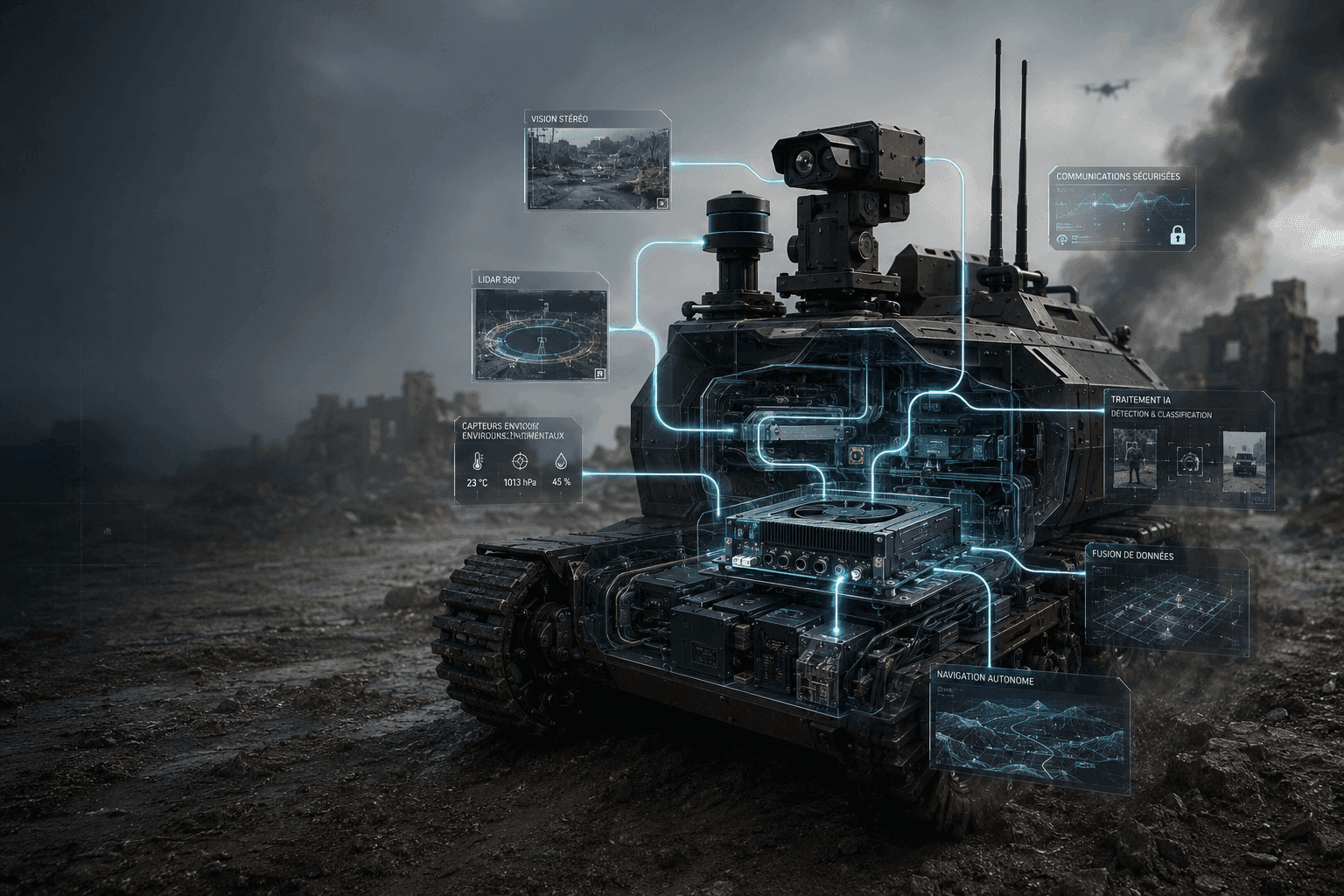
Onboard a drone or ground robot, the embedded industrial PC is the true brain of the system.
Its key functions include:
- Real-time video stream processing
- Sensor and payload management
- Execution of navigation, vision and decision-support algorithms
- Continuous operation in particularly harsh environments
These requirements call for computing platforms that combine processing power, ruggedness and reliability. NCS Systems: platforms designed for critical environments.
A specialist in rugged computing solutions, NCS Systems develops onboard platforms built to withstand the most demanding conditions:
- Resistance to shock, vibration and extreme temperatures
- Processing power suited to real-time and embedded AI applications
- Optimised integration into vehicles, drones and robots
- Maximum reliability in degraded environments
These solutions are used to equip ground robots, drones and military vehicles, as well as critical infrastructure that requires local data processing.
The Ground Control Station: a genuine command centre
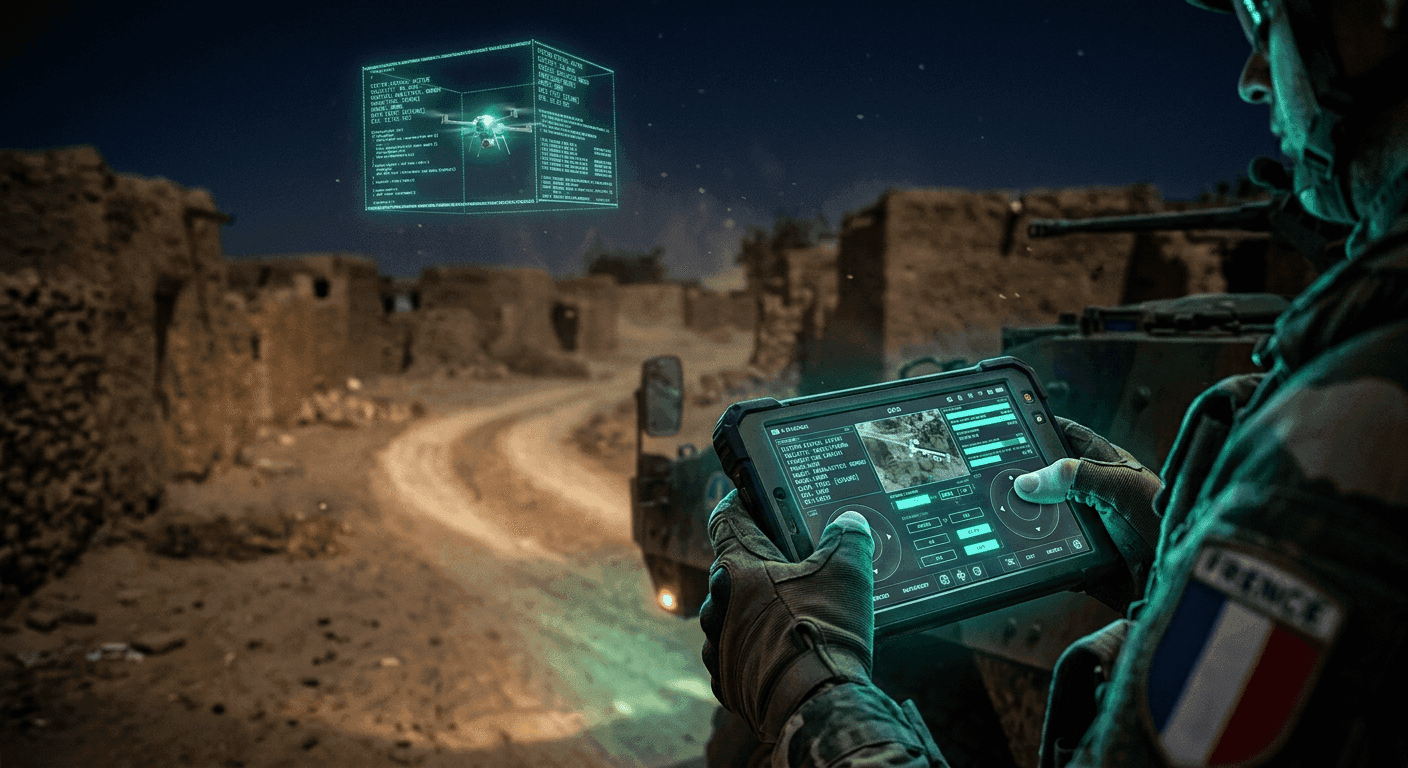
While the robot operates in the field, decisions today are still largely made by an operator at a Ground Control Station (GCS). This control station is used to manage the platforms, monitor video feeds, oversee the mission and interact with the various onboard equipment.
The quality of this station has a direct impact on operational effectiveness. It needs to provide:
- An intuitive human-machine interface
- Reliable, secure communications
- Low latency
- Continuous availability, even in heavily disrupted environments
ACKSYS solutions, in particular, make it possible to integrate high-performance industrial Wi-Fi networks directly within GCS systems. They support the deployment of mesh architectures that extend radio coverage, strengthen network resilience and ensure uninterrupted communication between operators and robotic systems.
iXnov: an integrated approach to covering the entire value chain
The challenge today is no longer just about having the best individual components, but about building complete, coherent and interoperable architectures.
This is exactly the approach taken by the iXnov group, which brings together complementary expertise covering the full range of needs for a modern robotic system:
- Critical connectivity → ACKSYS
- Onboard computing → NCS Systems
- Human-machine interfaces (rugged displays) → Planavision
- Video acquisition and processing → Techway
This complementary expertise makes it possible to design solutions that are ready to integrate, robust, and perfectly suited to the demands of defence, robotics and critical systems.
A decisive advantage for integrators
By drawing on this ecosystem, manufacturers benefit in numerous ways:
- Reduced integration risk
- Compatibility between different technology building blocks
- Faster development phases
- Simplified deployment
- Recognised points of contact for each area of expertise
Technologies that extend beyond the defence sector
While these architectures are currently in the spotlight because of modern conflicts, they already have a wide range of civilian applications:
- AGVs and AMRs for logistics
- Autonomous industrial vehicles
- Energy infrastructure
- Security and surveillance
- Robotic inspection
- Critical industries
The requirements remain the same: real-time computing, permanent connectivity, ruggedness and high availability.
Conclusion
Next-generation robotic systems rest on four technological pillars: processing power, connectivity, human-machine interfaces and video processing.
By bringing this complementary expertise together within a single ecosystem, iXnov supports manufacturers and defence stakeholders in designing solutions that are increasingly high-performing, resilient and interoperable.
Developing robotic, embedded or critical systems? Discover how the combined expertise of NCS Systems, ACKSYS, Planavision and Techway can secure your projects and accelerate the development of your next platforms.